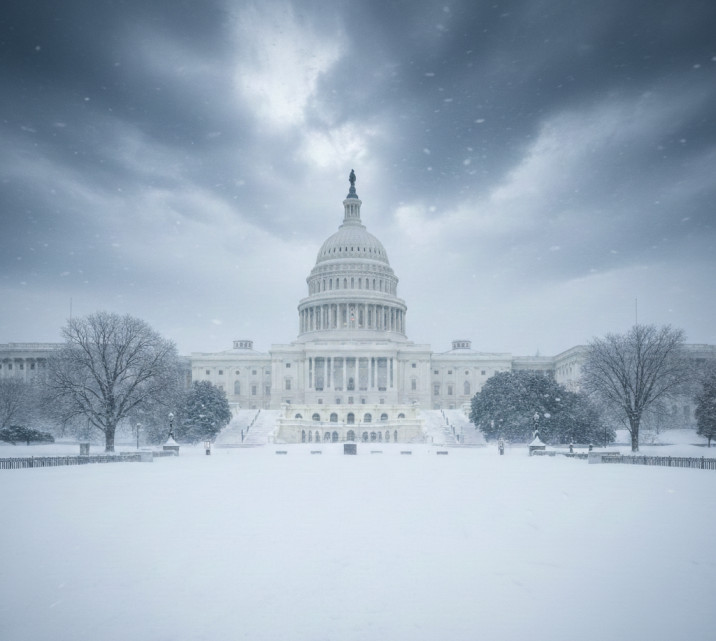
The Senate Agriculture Committee shelved its crypto bill vote. Washington DC was struck by a huge snowstorm on Sunday. Tuesday was re-scheduled to Thursday morning. Senators will resume slowly following mass cancellations of flights.
Clarity Act Promises Powerful End to Years of US Crypto Regulatory Confusion
The Clarity act seeks to introduce clarity in the crypto regulations. It would divide the jurisdiction of SEC and CFTC of digital assets. This law would put an end to years of regulatory confusion. The text of the latest bill has been largely supported by the crypto industry.
Cryptocurrency ETF Outflows hit 1.7billion.
The prior week recorded high outflows of crypto funds amounting to 1.7 billion US dollars. This is the lowest week in many years since November 2025.
Single-asset outflows of Bitcoin alone were in the negative to the tune of $1 billion. Ether ETFs have been withdrawn by 630 million.
XRP Shows Strong Resilience as Bitcoin and Ethereum Face Heavier Selling Pressure
Smaller outflows were experienced by XRP; $18.2 million. The outflows of Ethereum constitute about 3.5 percent of the total holdings.
Outflows of XRP comprised of slightly less than 1.1 percent of assets. Bitcoin and Ethereum are being sold by investors at a higher rate.
Agricultural Committee of Senate Markup.
The committee meeting will be rescheduled to Thursday 10.30 AM. The bill will go through the members and have amendments.
They will decide on whether or not to progress it to full Senate. There are still chances of flight delays which will impact on the attendance of the members.
Partisan Gridlock Delays Crypto America Bill Despite Committee Outreach
Crypto America also called the spokesperson of the committee to inquire. There was no response on changes of the schedule.
The bill is currently partisan and only Republicans are on its side. A fortnight of bi-partisanship talks have already postponed proceedings.
Bipartisan Support Problems.
The bill is yet to be publicly supported by democratic senators. The areas of contention are the provisions of decentralized finance (DeFi).
There are senators who are not familiar with the basics of blockchain infrastructure. Their conservative way of thinking does not fit in crypto systems.
Senators Rush to Learn DeFi, Says Blockchain CEO
These issues were discussed by the CEO of Blockchain Association Summer Messenger. According to her, the conflict is based on the lack of education.
Senators should have additional time to learn DeFi protocols. Nonetheless, education must occur within a short period considering the significance of crypto.
New Competition Amendment on New Credit Card.
A bipartisan credit card amendment was put forward by Senator Roger Marshall. The proposal was co-sponsored by Dick Durban and Peter Welch.
Big banks would enable two non-Visa/Mastercard payment systems. The merchants would have an increased number of transaction processing options.
Through this amendment a more equal playing field is established. The payment processors such as Ripple may gain significantly. This would bring in more competition in credit card networks. Merchants could have faster and cheaper transactions.
Optimistic View of Senator Gillibrand.
Senator Kirsten Gillibrand was confident that the bill would be passed. The senators have intensely collaborated over the past six months.
The two bills are on various regulatory aspects. The Agriculture Committee takes care of the CFTC related electronic commodity laws.
Bipartisan Coordination Continues as Banking Committee Navigates SEC and Digital Asset Oversight
Banking Committee deals with SEC and banking matters. Digital assets are both security and commodity characteristics.
The two committees are required to work together to promote their bills. There is still collaboration on a bipartisan basis even in present partisan staging.
Significance of Crypto Regulation to America.
Dealing with clear rules will be of advantage to the US economy as a whole. In the United States, the amount of unbanked people and underbanked people is about 30%.
Cryptocurrency gives access to financial services in an easy manner across the world. The blockchain technology is useful in the immediate transfer of values in the whole world.
Strong Consumer Protections Position New York as a Safer Crypto Finance Hub
Protections on consumers will make new entrants aware of investment risks.Effective protection of the market participants will be achieved through proper disclosures.
Effective regulation makes crypto business possible in the domestic market. New York has the ability to sustain its position in the financial market.
The Effect of the Clarity Act on XRP.
Senate draft makes XRP a digital commodity. CFTC would have a monopoly of XRP spot markets. This makes the Ripple court decision of 2023 legal. XRP could be listed on US exchanges without any legal hitches.
XRP would work within well-defined commodity frameworks.
Ripple’s RLUSD and XRP Gain Powerful Boost From Commodity Status Clarity
The RLUSD stablecoin developed by Ripple would be able to interface with regulated derivatives markets.
US banks would be comfortable with the use of XRP on an institutional level. Statutory commodity status eliminates a lot of friction as regards compliance.
Co-ordination of SEC and CFTC.
The harmonization exercise between SEC and CFTC was called back to Thursday. The two agencies have been competing on crypto jurisdiction over the years.
They are now collaborating on regulatory frameworks. This collaboration has not been taking place in decades.
Clear Crypto Rules Face Long Road Despite Transparency Benefits
It will be years upon Trump signing legislation before rule-making. Implementation will be done in details by the SEC and the CFTC.
Effective coordination eliminates redundant rules and specifications. Transparency is good in favor of regulators and crypto firms.
Government Shutdown Potential Impact.
The SEC is making plans in case it closes down. Another bill of funding is undergoing Congress now. A shutdown would push crypto legislation weeks behind. Long waiting times would ensure a longer duration of regulatory uncertainty.
The participants in the market are hoping that Congress would solve this fast. One month closure would greatly affect development.
There should be cooperation by senators to eliminate funding gaps. The timing of crypto regulation will rely on the government operations.
Market Analysis and Observation.
The vote on Thursday is a procedural vote and not a final passage vote. Results will be responded to by market sentiment.
With a successful progress, a bullish momentum might be generated instantly. Failing of the bill would prolong existing market weakness.
Crypto Market Awaits Critical Signal as US Legislation Outcome Nears
A successful passage would give a clear picture of the market in the long term. Rejection implies further regulation overload of crypto assets.
US institutional capital is waiting with governmental signals. Risk assets will shift depending on the development of the legislation.
Conclusion
The Clarity Act is an essential development of crypto regulation. Momentum was not stopped but only slowed by winter storms. Political cooperation still exists despite the existing partisan stance. These obvious rules are badly required in the crypto industry.
The vote by the committee on Thursday will be an indication of the future direction. This week is a time to keep a close eye on the developments in the market. Crypto regulation by the US might finally reach the desired clarity. Such a result impacts millions of American crypto owners.

Crypto news writer since 2022, covering blockchain, digital assets, and market regulation.
Focused on clear, accurate reporting and simplified analysis for global readers.